Farms of Tuolumne County

Your Source for Local Food

Archive

  1. The Green Revolution: Inside the ECOpreneurial Movement

    Comments Off on The Green Revolution: Inside the ECOpreneurial Movement

    The Green Revolution: Inside the ECOpreneurial Movement

    by Jessica Brody

    In a world where environmental concerns are increasingly at the forefront of societal and business considerations, ECOpreneurship emerges as a vital and innovative field. ECOpreneurship encompasses a new wave of entrepreneurs who are dedicated not only to profit but also to implementing solutions for environmental challenges. This novel approach to business combines entrepreneurial zeal with a commitment to sustainability, offering a pathway to address ecological issues through innovative, economically viable means. This article shared below by Farms of Tuolumne County aims to introduce the fundamentals of ECOpreneurship, providing practical guidance for those aspiring to make a meaningful impact in this burgeoning sector.

    Understanding the ECOpreneurial Mindset

    • Embracing Sustainability: Recognize that sustainability is not just an environmental concern but a business opportunity. Sustainable practices can lead to cost savings and new market opportunities.

    • Innovative Thinking: Cultivate an innovative mindset. ECOpreneurs often succeed by thinking outside the box, finding new ways to solve old problems.

    • Risk Management: Understand and manage the unique risks associated with ECOpreneurship, such as regulatory changes or evolving consumer preferences.

    • Community Engagement: Engage with your community. Understanding local environmental issues and involving community members can lead to more impactful and accepted solutions.

    Building a Green Business Plan

    • Market Analysis: Conduct thorough market research to understand the demand for green products or services in your target market.

    • Sustainable Supply Chains: Develop a supply chain that minimizes environmental impact, considering factors like sourcing, production, and distribution.

    • Financial Planning: Ensure your financial plan reflects the unique aspects of an eco-friendly business, such as potential for government grants or incentives.

    • Measuring Impact: Plan for how you will measure and report on your business’s environmental impact, as this can be a key selling point to customers and investors.

    Funding Your ECOpreneurial Venture

    • Grants and Incentives: Explore government grants, subsidies, and incentives designed to support green businesses.

    • Angel Investors and VCs: Target investors who are specifically interested in funding sustainable ventures.

    • Crowdfunding: Leverage crowdfunding platforms to raise funds while simultaneously increasing awareness and support for your environmental cause.

    • Partnerships: Consider forming strategic partnerships with established companies or non-profits to gain access to additional resources and credibility.

    ECOpreneurship and Technology

    • Leveraging Green Tech: Stay informed about the latest developments in green technology, which can offer innovative solutions and improve efficiency.

    • Digital Marketing: Utilize digital marketing strategies to reach a broader, environmentally conscious audience.

    • Data Analytics: Use data analytics to track your environmental impact and business performance, enabling informed decision-making.

    • Cybersecurity Measures: As many ECOpreneurial ventures rely heavily on technology, ensuring robust cybersecurity measures is crucial. An online cybersecurity degree can be a valuable asset in safeguarding your business’s digital assets.

    Continuous Learning and Adaptation

    • Adaptability: The environmental sector is continuously evolving. Be prepared to adapt your business model in response to new challenges and opportunities.

    • Networking: Build a network with other ECOpreneurs, industry experts, and environmental advocates. These connections can provide valuable insights and opportunities.

    • Feedback and Iteration: Regularly seek feedback from customers, employees, and peers. Use this feedback to iterate and improve your business model and practices.

    ECOpreneurship presents a unique opportunity to drive positive environmental change through innovative and sustainable business practices. By understanding the ECOpreneurial mindset, building a green business plan, securing appropriate funding, leveraging technology, and committing to continuous learning and adaptation, aspiring ECOpreneurs can effectively navigate this dynamic field. The intersection of business acumen and environmental stewardship in ECOpreneurship not only addresses critical ecological issues but also opens up new avenues for economic growth and societal benefit. As the world increasingly seeks sustainable solutions, ECOpreneurs are well-positioned to lead the way in creating a more sustainable future.

  2. Tamarack Tree Service

    Comments Off on Tamarack Tree Service

    45+ years of experience.

    Arboricultural Consulting: “International Society of Arboriculture”
    Certified Arborist WE-1287-A
    Residential Tree Service: Tree safety inspections; Pruning for health, safety and aesthetics; Hazardous tree removal, nuisance tree removal,
    unwanted tree removal
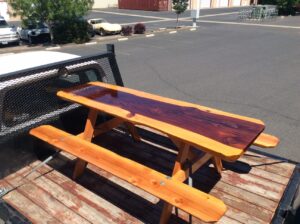
    We also make beautiful things out of wood (maybe even your wood).
    We look forward to helping you and your trees.


  3. The Fundamentals of Monetizing Your Hobby Farm by Jessica Brody

    Comments Off on The Fundamentals of Monetizing Your Hobby Farm by Jessica Brody

    The Fundamentals of Monetizing Your Hobby Farm

    If you’re reading this, chances are you’re a homesteader. And whether you grow lettuce, raise chickens, or make honey, you probably came to homesteading because you love the idea of being self-sufficient and living off the land. But what you may not have realized is that with a bit of hard work, you can turn your hobby farm into a thriving business. To help, Farms of Tuolumne County shares the following tips on how to start monetizing your hobby farm:

    Find Your Niche

    The first step to monetizing your hobby farm is to find your niche. You have plenty of options to consider, particularly in food-related industries. What can you produce that other farms in your area don’t? Are you able to grow a unique crop? Do you have a special variety of chicken that lays blue eggs? Whatever it is that makes your farm special, that’s what you need to focus on.

    Develop a Business Plan

    Developing a business plan is the next step. And, as Treehugger explains, your business plan is crucial because it will guide you through all the other steps and position you for long-term success.

    What are your goals for your farm? How many products do you want to sell each week? What kind of marketing will you need to do to reach your target audience? Answering these questions will give you a roadmap for years to come.

    Establish a Business Structure

    Every business owner needs a legal structure that aligns with their goals. Forming a limited liability company (LLC) can provide many benefits. For one, they offer limited liability protection for their owners, meaning the owners’ personal assets are protected if the company is sued.

    If you’re thinking about starting a business, it’s essential to consider all of your options and weigh the pros and cons of each structure. For most businesses, forming an LLC is a smart decision. But if you’re not sure whether an LLC is right for you, it’s best to consult with a lawyer or formation service who can help you make the best decision for your business.

    Digital Marketing

    Now that you know what you’re selling and who you’re selling it to, it’s time to spread the word! There are many ways to market your farm products, from setting up a website or online shop to participating in local farmers markets. Pick the marketing channels that make the most sense for your business and start promoting. A great way to do this is by using SEO and content marketing, which will drive traffic to your website and help elevate your rankings in online search results.

    Make Brochures and Other Handouts

    Don’t assume you have to stick with only digital marketing. Traditional methods like creating brochures can do wonders for a homestead business, and you can use a tool to create your brochure to put together your materials. Make some handouts that show what you offer, your location, hours of operation, and other pertinent information. Don’t forget to include links to any online opportunities, too, like social media and a website.

    Survey for Signage

    If you live near a heavily trafficked road or highway, another idea to consider is placing a billboard on your property or adding signage near the road. Be sure to consult your local regulations first. Once you get the all-clear, bring out a surveyor to get started. Being within property boundaries ensures you’re able to keep your sign up and won’t incur any violations, and the surveyor will mark the precise location of each edge of your farm.

  4. Tips from a Champion Pumpkin Grower

    Comments Off on Tips from a Champion Pumpkin Grower
    Here are some tips from a champion grower, Carla Suehowicz, who has donated seeds for FOTC to distribute this year.
    “I germinated one of those seeds.  The plant looks good.  Not all seeds germinate depending on what method  the grower
    does at the start.  I have 6 plants in one patch and 2 in Bill’s garden.  I will probably pull a couple in my patch.  To get a really big one each plant should have at least 700 sq ft. Preferably 900 sq. Ft.
    The grower should file the sides of the seed gently a little bit to get it to germinate faster.  Soak the seeds in a cup of water with a tiny bit of liquid kelp for 2 hrs.  After that plant the seed in 5-6 inch peat pot and put on a growers heating mat. Once it pops through the dirt put it under a grow light at least 12-14 hrs.  Once the first true leaf is out it can be planted outside out of the peat pot.
    When transplanting make sure you place it in the hole in the direction you want it to go opposite the first true leaf. Be careful getting it out of the pot so you don’t destroy roots. This year my dirt fell apart and I am praying for the best.  I am shading them with shade cloth under little huts. I think most will make it.
    The seeds I gave you came from beautiful pumpkins and I hope they grow big and beautiful for someone else.”
    You can find more growing tips at pumpkin growing instructions-04052017191508
    and at bigpumpkins.com.
    Note: we also received winning seeds from Jesse King.
  5. Tuolumne County Juvenile Dentention Center Garden Project Photos

    Comments Off on Tuolumne County Juvenile Dentention Center Garden Project Photos

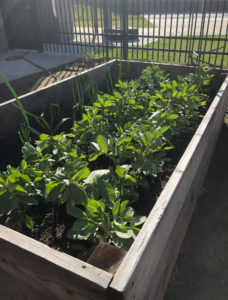
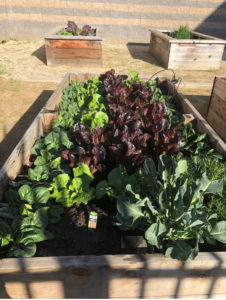
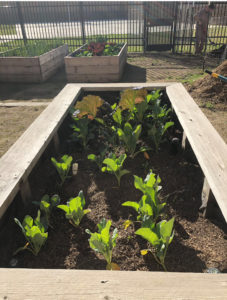
    FOTC was proud to award a grant to the Tuolumne County  Juvenile Detention Center Garden Project in 2019.  With mentoring from JoLyn Miller, Regional Director for UC Cooperative Extension, they have made tremendous progress.

    Here is a note from her:

    Just wanted to share photos of the garden. They harvested lettuce the other day and made their first salad bar! It’s working wonderfully. I have a bit of money left over still and was going to buy them a kit to raise butterflies. I’d like to find native milk weed.


    .

  6. The Standard Pour

    Comments Off on The Standard Pour

    19040 Standard Rd., Sonora, CA 95370
    209-532-7687

    Hours:

    Tue. – Thurs. 11AM-8:30PM
    Fri. & Sat. 11AM-9PM

  7. Terms of Use

    Leave a Comment

    Farms of Tuolumne County (FOTC) Terms of Use and Statement of Privacy

    1. Terms

    By accessing this web site, you are agreeing to be bound by these web site Terms and Conditions of Use, all applicable laws and regulations, and agree that you are responsible for compliance with any applicable local laws. If you do not agree with any of these terms, you are prohibited from using or accessing this site. The materials contained in this web site are protected by applicable copyright and trade mark law.

    2. Use License

    1. Permission is granted to temporarily download one copy of the materials (information or software) on FOTC’s web site for personal, non-commercial transitory viewing only. This is the grant of a license, not a transfer of title, and under this license you may not:
      1. modify or copy the materials;
      2. use the materials for any commercial purpose, or for any public display (commercial or non-commercial);
      3. attempt to decompile or reverse engineer any software contained on FOTC’s web site;
      4. remove any copyright or other proprietary notations from the materials; or
      5. transfer the materials to another person or “mirror” the materials on any other server.
    2. This license shall automatically terminate if you violate any of these restrictions and may be terminated by FOTC at any time. Upon terminating your viewing of these materials or upon the termination of this license, you must destroy any downloaded materials in your possession whether in electronic or printed format.

    3. Disclaimer

    1. The materials on FOTC’s web site are provided “as is”. FOTC makes no warranties, expressed or implied, and hereby disclaims and negates all other warranties, including without limitation, implied warranties or conditions of merchantability, fitness for a particular purpose, or non-infringement of intellectual property or other violation of rights. Further, FOTC does not warrant or make any representations concerning the accuracy, likely results, or reliability of the use of the materials on its Internet web site or otherwise relating to such materials or on any sites linked to this site.

    4. Limitations

    In no event shall FOTC or its suppliers be liable for any damages (including, without limitation, damages for loss of data or profit, or due to business interruption,) arising out of the use or inability to use the materials on FOTC’s Internet site, even if FOTC or a FOTC authorized representative has been notified orally or in writing of the possibility of such damage. Because some jurisdictions do not allow limitations on implied warranties, or limitations of liability for consequential or incidental damages, these limitations may not apply to you.

    5. Revisions and Errata

    The materials appearing on FOTC’s web site could include technical, typographical, or photographic errors. FOTC does not warrant that any of the materials on its web site are accurate, complete, or current. FOTC may make changes to the materials contained on its web site at any time without notice. FOTC does not, however, make any commitment to update the materials.

    6. Links

    FOTC has not reviewed all of the sites linked to its Internet web site and is not responsible for the contents of any such linked site. The inclusion of any link does not imply endorsement by FOTC of the site. Use of any such linked web site is at the user’s own risk.

    7. Site Terms of Use Modifications

    FOTC may revise these terms of use for its web site at any time without notice. By using this web site you are agreeing to be bound by the then current version of these Terms and Conditions of Use.

    8. Governing Law

    Any claim relating to FOTC’s web site shall be governed by the laws of the State of California without regard to its conflict of law provisions.

    General Terms and Conditions applicable to Use of a Web Site.

    Privacy Policy

    Your privacy is very important to us. Accordingly, we have developed this Policy in order for you to understand how we collect, use, communicate and disclose and make use of personal information. The following outlines our privacy policy.

    • Before or at the time of collecting personal information, we will identify the purposes for which information is being collected.
    • We will collect and use of personal information solely with the objective of fulfilling those purposes specified by us and for other compatible purposes, unless we obtain the consent of the individual concerned or as required by law.
    • We will only retain personal information as long as necessary for the fulfillment of those purposes.
    • We will collect personal information by lawful and fair means and, where appropriate, with the knowledge or consent of the individual concerned.
    • Personal data should be relevant to the purposes for which it is to be used, and, to the extent necessary for those purposes, should be accurate, complete, and up-to-date.
    • We will protect personal information by reasonable security safeguards against loss or theft, as well as unauthorized access, disclosure, copying, use or modification.
    • We will make readily available to customers information about our policies and practices relating to the management of personal information.

    We are committed to conducting our business in accordance with these principles in order to ensure that the confidentiality of personal information is protected and maintained.

  8. Twain Harte Tree Farm

    Comments Off on Twain Harte Tree Farm

    Owners: Don and Peggy Moore

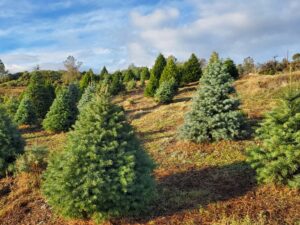
    For over 50 years this property has been home to Twain Harte Tree Farm, once a popular family friendly choose and cut Christmas tree farm.  In 2023 we closed our retail tree business and “retired”, but we will still respond to inquiries about wholesale purchases. Our beautiful outdoor venue for weddings between May 1st and Labor Day weekend will continue to be available for up to 100 people and we thank you in advance for considering our facilities.


  9. TableTop Christmas Tree Farms

    Comments Off on TableTop Christmas Tree Farms

     17997 Harper Rd., Groveland, CA 95321

     Choose and cut trees.

    Table Top Christmas Tree Farms


    209-768-4133
    Douglas Fir,  White Fir, Spruce, Silver Tips, and Red Fir trees available.  Road conditions may require SUV or 4 wheel drive vehicle, due to rain or snow.  Farm subject to closure without notice due to road conditions or sold out inventory. Please call to insure farm is open before you make the drive. Check website at www.tabletopchristmastreefarms.com for additional information.

    How we Farm

    We use stump culture, the practice of preserving the tree roots and growing new trees from the stump. When we harvest a tree, the tree is getting a haircut.  A tree cutter will leave multiple branches on the stump to grow a new tree.